Sunday, 23 August 2015

If you enjoy selfies and "foodporn"-type shots, the Capitol is for you.

The Capitol Building is a vision with illuminated bidet sprays!


Wedged between the boot of city hall and the quay side of town, the Capitol Building is an erecting stature that boasts the same towering presence of Ion Orchard, Tangs, and even, Abercrombie and Fitch. Although they share similar powerful infusions powered through air vents- think yuzu, vanilla, and Ion's aloe relaxant, Capitol's floral spray matters because it throws off the simmering rank smells of concrete, sweat, and the urban buzz outside. "Breathe new life into luxe," it promises.

Since its restoration, Capitol has swung its doors open (with a Jubilee highlight of a film 1965 to boot) to fanciful eateries and upscale boutiques- a modern fixture of luxury hotels one can expect to par for the course.

Though, without breaking the bank, the swanky new mall is a better place to take your coffee, along with a couple of selfies.


Fixated onscreen toward my right was not what it looked like- a burger.
As a stopover for the blistering hot afternoon with plenty of time to kill, Capitol offers a platter of food options. Motivated by two-storey boutique cafes with a view to absorb the piazza's experience, the place is fully air conditioned with an outdoorsy view bathed in daylight. Apart from a few uninitiated tourists captivated by its interior, you'd find locals tucked into the corners of cafes, settled in with the atmosphere, serving as backdrop for a Sunday's painter landscape artwork.


More excitedly in its basement, you'd find the novelty in BreadTalk owned Palette, a multi-cuisine (read: food court) dining concept housing signature dishes with award-winning titles like a wrestling belt. But there's no fighting for seats here. Palette is an upscale food court with uniformed wait staff and a functional cocktail bar smacked at the entrance- just in case you missed it the first time. With unflinching gazes, they'd eagerly bring you to your seats, which, compared to the endearing concept of "chope" at real food courts, are assigned. You'd be handed with an iPad, per protocol with most dining concepts these days, and you'd want to ask for a glass of water. But that's not in tandem with the rest, no; water's three dollars, free flow.

Easy navigation make ordering food fool proof.

Confirming orders from a touch-and-go iPad beats old fashioned menus, hands down. 

If you're not yet dizzy from the glitz of luxury food court, the food actually performs well. It's what you'd expect from spending $11 for a bowl of soupy noodles. Or in our case, $4.50 for prawn chee cheong fan and $3.50 for six pieces of prawns swathed in crispy beancurd skin. Chugging beer alongside the afternoon dim sum is also a bliss, notwithstanding the chargeable service fee that'd later, much to our chagrin, top off our bill of two beers and dim sum to a steep $32.50.

That's me seducing the lens with a fun-sized seaweed wrapped beancurd roll.
A cool, tall one smooths over your palate, greased with delicious hawker dishes.

As the wafting fragrance hits you on the nose one last time before you sober up from the exorbitance of Capitol, joining back the school of people outside feels real. The crowd, the construction, the noise drilling into your consciousness can only be an awakening. That if Ion made you feel like the rich, Capitol would be royalty, like every whiff of its floral scent unique to its illusory lavishness.

Must be a bitch to clean.


Sunday, 16 August 2015

BRB, I'm still dreaming up a title.


Hello, why are you daydreaming? 

Our minds are usually adrift, dimly aware as to where or, even, why we're fantasizing. Maybe the round table talk was getting a trifle tired over dinner, or, perhaps, we don't really care about that friend who can't stop yakking about his dismal relationship. We daydream because we're restless, in other words, regardless of what we dredge out from the mud-pit that is our imagination. "Can I leave?" "I need to scratch my balls, would he take that the wrong way?" "Can he tell that I'm not listening? OK. Make eye contact." 

Then, what about the unsolicited hours when we're asleep? Unlike with spacing out, dreaming is night-time activity. And dreams are cathartic. They're unique to individual experiences, and they could also be puerile. Between fantasizing about munching somebody till their eyeballs roll back into their sockets and overplaying an entire murder sequence on your boss, your thoughts can only be so ludicrous in dreams it makes daydreaming kiddie fodder. 

I suffered the latter last night after someone turned the A/C off and, groggily maneuvered my way to the loo to take a call time from sleep, resumed afterward unhappy, grouchy, and depressed. Because it happens every time someone disrupts the cyclical motion of rest, I'm starting to recognize a pattern. The mis-en-scene was a rustic hotel that elicited a Stephen King thriller, the characters were blurry caricatures of people who could cast an episode of Lost, and the plot was a thumping march toward my own imminent doom, eventually. In those couple of hours wherein I played victim/hero/protagonist in my own drama, the fear was so gripping I woke up dislocated (psychically). 

But why do we dream? Theoretically, dreaming has nary of a function to the everyday life. It barely makes anyone smarter or relaxed as some scientists have claimed. I'm my own testimonial of its misbelief because even the most violent of naps have not honored my GPA nor increased my serotonin levels. Perhaps its most credible explanation lies in the still processing of memories, where our brains suss out important information and interpret them accordingly to whichever feeling was consciously dominant before we hit the rack. So, for instance, if you've just suffered a break up, you are going to be dreaming up a sad tale; or, if you've just taken an important paper, you might dream about failing- because you're anxious. "Don't sleep unhappy", as our mothers used to nag.

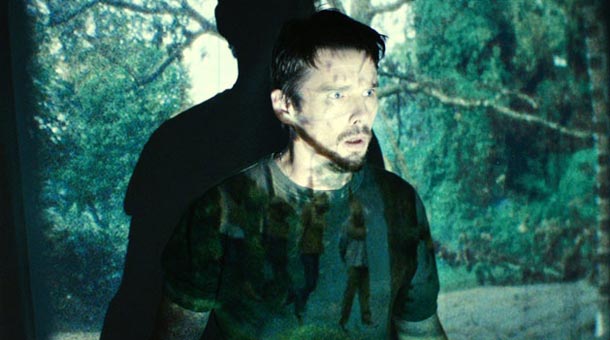
However, all this makes little sense because we're theorizing something that is just as functional as to reprieve from a busier daytime (or social media). Dreaming is actually less symbolic, contrary to Freud who romanticized that we are all poets in the night. It is neither an auspice that tells you which lottery digit to buy nor a warning that shapes our future, than merely memory processing like a videotape while we rest. It plays back memorable events relentlessly and sometimes distorts the tape. That that basically delineates the entire Sinister 2 movie, featuring Ehtan Hawke and a bunch of super8 home reels on August 20, dreams too, are terrifying to anticipate.

What is more disconcerting about dreaming is the type that overruns its effect into the day. Like mine, your dreams could spoil the mood. If you were dreaming of something hellish, you would not be able to shrug off its aftermath as if it were just conversations at the water cooler. Bad dreams weigh down the merriest of men, in brief. I couldn't even sit proper and write this until I hit the gym, because bad dreams embargo your daytime cheerio.

The only logical retort as to why we dream and interpret them is because we don't leave questions unanswered. If we do, it makes us feel uncomfortable, like a rash whose itch won't stop until you got to the rub of the problem. The natural curiosity of Man to question, argue, and make for a case in point about almost anything is evidenced in the emphasis we place on matter as infinitesimal as a dream. (Representative: The Chicken or the Egg dilemma.) But before I derail into the intellectual hodgepodge of dream psychology, my stake is a simple one: Don't be that asshole that analyses everything

Born in a typical Chinese family wherein traditions eclipse common sense, I spent most of my growing up years swathed in superstitions. That they were "life-altering", a dream was supposed to crack a hole in the universe by predicting the next Big Sweep, leaping ahead the rest who but all want to get rich quick. If there were any clues leading to numbers, I was the Reiki master, reporting number sequences to my parents. ("Go for the gold, you idiot!") And I indulged in it. I would forage for numbers sleepily lost and then watch them snake a queue at the lottery counter, hoping against hope that for once, dreams do come true. 


They never did. So don't be that asshole that squanders money on dreams too. 


Saturday, 8 August 2015

That Was Embarrassing... The New Fantastic Four Punishes Its Audience For Trying To Care.


In the anticipated flop of Marvel's "first family superhero" movie Fantastic Four, the latest reboot had me at its first half, wide-eyed and eagerly consuming backstories usually unseen from the claptrap of superhero blockbusters. Sure, it's great with what stood Fantastic Four's opening apart from other Marvel heroes like Ironman and the rest of The Avengers. There was a curiosity to its origin story, made up by a new cast of relatively green actors (Miles Teller, Kate Mara, Michael B. Jordan) to the blockbusters. But somewhere between the middling action and confusing onscreen chemistry among its characters, I gave up. It felt almost embarrassing to follow through; not least uncomfortable that its brilliant cast had to makeover an entire franchise with what little was offered to them in its screenplay. Wait, would there even be another movie?


By now, there are four. Not of the superhero members Reed, Sue, Johnny, and Ben, whose powers make one hell of a potential, but four desperate movies that have all but left viewers disgruntled with lackluster results. I know, their powers are almost-lame for the effects, with an elastic rubber belt, a disappearing woman, a walking torch, and a rock. But those of us who aren't familiar with Marvel's Fantastic Four comics would be aware of Tim Story's 2005 campy make of the superhero quartet. They were bad, but they survived. It’s the one where, with Ioan Gruffard, Jessica Alba, Chris Evans and the dimly known Michael Chiklis playing the equally, physically unrecognizable Thing, I wished I caught Wolverine Origins, instead. Though, this version shouldn't have followed suit.


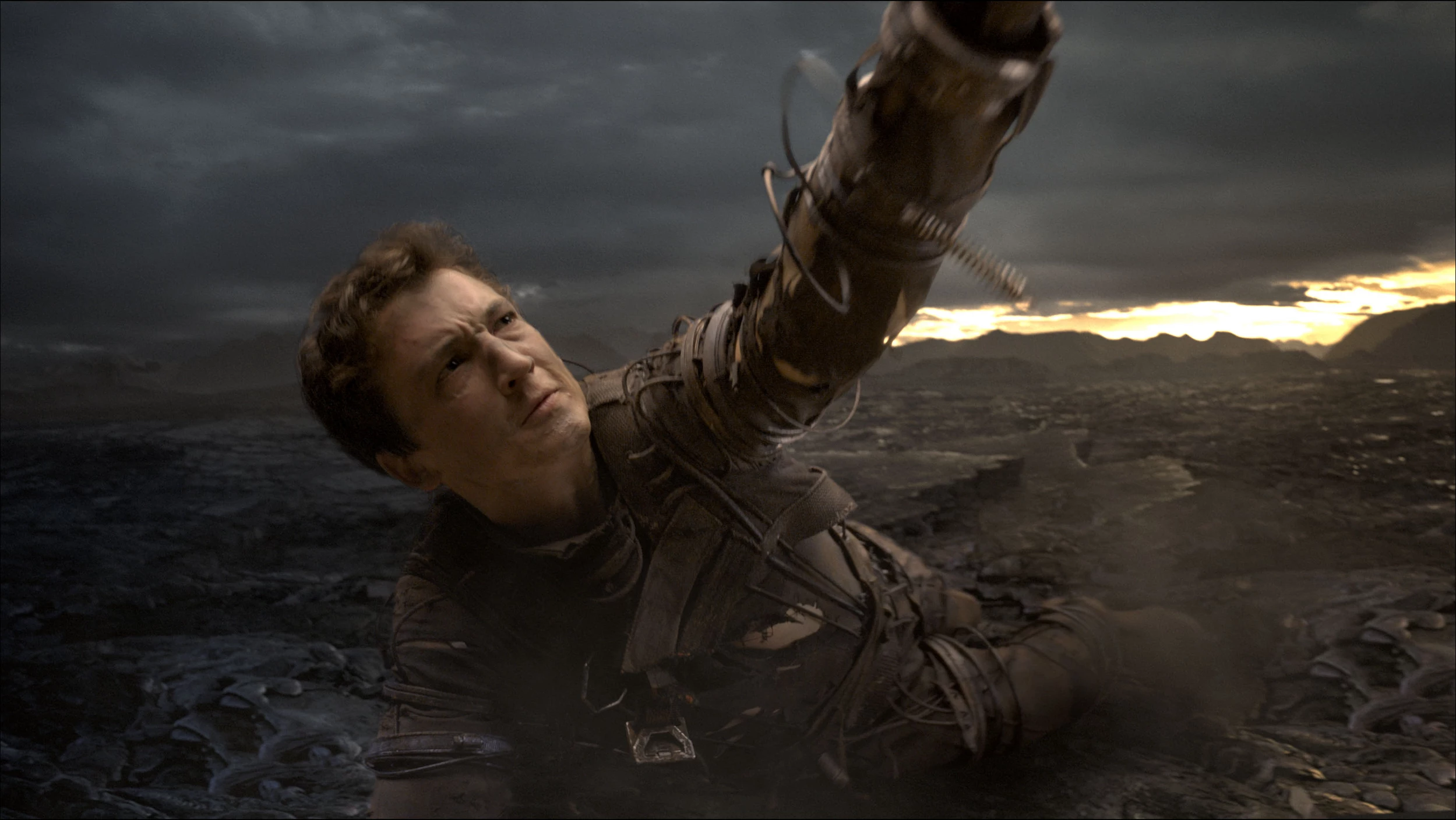
Unlike with its predecessor, director Josh Trank, who carved a pretty good "superhero" film Chronicle out of the hand-held cam genre, succeeded a different initial take. First, he did away with the caricature of superheroes. Besides keeping their powers, almost everything else about our beloved members were refreshingly offbeat from its all-familiar plot: viewers were invited to new onscreen bromance between Reed Richards and Ben Grimm, something not offered before, but captured decently over the span of their boyhood, where interactions over a teleporting machine introduced early into the film as a twelve-year-old’s creation (scoff) became the catalyst for the movie's only adult space action. Dr. Franklin Storm, represented by actor Reg. E. Cathey, also adopted The Invisible Woman, who was played by Kate Mara. Furthering the distance from the original, the cast travels inter-dimensionally, instead of eating radioactive rays for breakfast from a spaceship. Stretching our imagination beyond this universe, the members stepped foot onto an unknown CGI-splayed Planet Zero where they were to meet freak accidents that would then uniquely alter them irrevocably, therefore giving them their "powers". While we've all heard the last one before with how superheroes would spring from their pedestrian lives into glorified heroic ventures, for one, everything from the comics felt too camp, too unreal for modern theaters, as if we were supposed to empathise the fact that freakish accidents could be a blessing in disguise if it's almost-Godsend powers. For Trank, 2015 gave us enough resource for a humanised plot to tap on our imagination for what is to be wished that they needn’t have to suffer the dangers of inter-dimensional travel. You get the backstory: If you can't insure an unpredictable rally of loyal comic fans, you can't insure space travel.


I almost didn't want them to transform, as Trank cleverly dovetailed their origins to a terrifying sci-fi mishap. I loved the far-out concept of Planet Zero, contrary to reviewers who felt that it looked too much like Mars-- on an amateur's green screen. I loved, with electrifying verdure that traced lava patterns on the craters, how ignorant the characters were to its omen when they took things into their own hands with the teleporter after getting half-assed drunk, embittered by the fact that history's Neil Armstrong took credit for real science. "Let's get a closer look!" Says one intoxicated scientist Reed Richards, who should be a public warning that drinking on the job is always dangerous. Most of all, I loved how Susan Storm didn't even go there, but got her powers anyway from helping her beloved friends. I loved how accidental director Trank made the whole thing look, which eventually became the entire movie. A wreck.

It was good, at first. It made me love my superheroes again with tidbits thrown in here and there about rewriting characters with a grittier script, as if growing up should not age me from loving my juvenile hobby. But all that fell away when reality hit harder than, well, everything about it. From the poor action sequence, to the “ah?” illogical storytelling, the only fantastic thing about the movie was its fans, who filled the theaters full last night. Apart from scathing reviews that I shall not expatiate because everything that could have been said and spat about the movie has already been eloquently written to tear it apart, nobody talked about the groundwork that is its film score, a fantastic rhythmic harmony by Philip Glass who, may I assume, was brought onto the project because everything else was a prompt that I should quit my superheroes, and grow up after its fourth attempt.


Of course, Fantastic Four is not ridiculous because it's bad. It's bad because it's too easily one of the worst works of movies I've seen. To note, I'm not faulting the opportunities it could have exploited, given its great preface for a darker narrative about modern superheroes. (Remember how well Nolan's Batman did?) I'm lambasting the fact that it's a result produced from intentional meddling by the studio guys, to and fro with its director, which isn't anyone's business in the first place, until you make it so public I can't watch a movie without tagging a bad name to it. What's awful about it is that it punishes an audience who's paid money to watch a work fraught with disagreement between its makers and studio superiors. It's like watching a final year project of a movie that has suffered the critique of the unbendable, criteria-abiding lecturer policing as high-eternity mentor. It's as we all know, "artistic integrity" sacrificed for good grades. Or in Trank's state of duress, for saving Fox's face/rights. 

Just after reviews flooded in, somewhat mutating the movie into a blockbuster scorn today, Trank took to his personal Twitter account to profess that he'd a better version of it, but we won't get to see it. Insinuating that Fox had a hand in his movie, nobody cares. Or, at least I don't. In fact, I don't want my money back; take it, I signed up for it despite early buzz that the movie was going to drop with a silent thud later. I was optimistically adamant about reviews because I didn't even like Marvel's The Avengers anyway. Superhero movies, which have become a thing of a brisk trade, aren't usually good movies on their own. They're overdone with huge earth-shattering explosions and underwhelmed by little expositions. And Fantastic Four was going to be my saving grace for the latter. What Fantastic Four succeeded in was neither, due to its own off-screen dilemma. 

Thanks Josh Trank, you not only distanced yourself from a work you produced, you turned tables on the studio that granted you access to everyone's highly-favored squad of family superheroes. Granted, you're a talent, but like your Reed Richards who dumped his friends after the accident because he felt "no good for anybody", you played Martyrdom to nauseating effect this time, which really reminds me of that one group member who discredits teamwork just because the pitch was bad. Nobody likes a downer and you made a fantastic case.


Saturday, 18 July 2015

The Grey Area of Inpatient Healthcare

Say cheese! 

Hospitals are odious places. Around every corner, air is sterile, cold, and masked by iodine tipping off from bottles of sanitizers installed like ominous reminders that the place, virally contractible, is plagued with death. Patients, who if weren't writhing in pain in their beds are but also set off in a coma, smell really bad. They smell like sh**t and look just as soiled. Their pallid faces bear the same sorry countenance as to being run over. By bad luck. It's the pantomime of anger, sorrow, disgust, and disappointment they wear on their faces with frowns, mouth agape, like the horde of actors from The Walking Dead, except they shouldn't be coming back undead afterward, because they're the rotting flesh that insults the very essence of the living. In the main, hospitals are sickly, dreadful, and completely- wait for it- inhospitable places.

To and fro, nurses, doctors, medical officers, therapists, and anyone else in a scrub busily attending procedures, or pretending to be are always typing, always walking, and always never around when you need them. They are busy people who have little time for poorly instrumented questions. Since emotional therapy would cost you, it would be more useful to arrive with a journalistic formula before your kin's doctor-in-charge. (WHOM am I speaking to? Oh, you're the neurosurgeon, WHY, I can barely tell by looking at your age. WHAT's the patient's condition now? I see, so WHEN do you reckon he'll ever wake again? Hold on, WHERE is the toilet? I need to pee. WHY is he not waking again? Dammit Doc, he owes me money!) How could one stand being around is a thought that needs reflecting. If one weren't choked up on tears from a dying relative, one would've been choked up on vomit from the wafting odor of death. Looking on- optimistically, if I may- it seemed that the only untouched area is the Starbucks a floor below, whose baristas don't quite fit in either because- I feel bad for saying this- hospitals are not the places to go for a cup of Joe. Joe's up there, hacking his last breath.

Of course, I didn't mean any of that. Hospitals save lives everyday, and I ought to be thankful- notwithstanding everything it has to do with dying.

When I was I little, I used to think of hospitals to be cool places to be seen in. In every sense of the word, computers, interiors, and mint-colored scrubs painted a picture parallel to the television dramas I watched at prime time reruns: Doctors with their stethoscopes, nurses with their mysterious surgical masks, and patients, ever crooning in pain, became a crux to the compelling arc that made hospital dramas so interesting to watch in the first place. Granted, I knew nothing about reality. My only impression of hospitals were misguided episodes of ER, accompanied by the roleplaying kit gifted to me by my parents who, pegged me if only someday to become a doctor, thought there could also be no better career than to look cool, save lives, and make promiscuous amounts of money doing it.

And then I grew up, witnessed a passing of a relative, and learnt the god-awful truth behind hospital facades, all-boasting a misconstrued heroism. More common than its televised drama, there is pain, with every life lost on hospital ground. For instance, my grandmother passed quickly by the time she needed intensive care, and following suit, as did my grandfather. It was heartbreaking. I watched healthily able people degenerate into human shells where its spirit slowly left them behind. I picked up early signs of the dying on their rotting flesh; turning rosy complexions into a sallow ugly color like the headstones they were gradually matching with. It was abhorring, gothic, and frightening with how seeing lively persons reduced to almost-corpses can change your early impressions of a place. Dominantly, hospitals became the territorial equivalent of the morgue. Such that if you're absolutely, positively needed on one of its beds because you can't sleep on any other right now, you might as well be dead.

We napped, lolled, and lazed in bed all day.


I say this because a couple of weeks ago, I thought another person in the family was going to die. A beloved of mine whom I respect, and, should she ever pass someday, would miss dearly, had a close shave with death. It was on a Sunday, half-an-hour before midnight, when my phone pinged a text from a cousin whom I barely ever talked with: "Are you at SGH (Singapore General Hospital)?" I was unsure, curious, and, yet- quite frankly- too tired to care. Dug deeper and found out that it was Godmom who had been hospitalised, a sleepy Sunday night then erupted into a frenzy of tears, panic, and unsolicited thoughts of death. Not that anyone can fully prepare himself or herself for it, but entertaining its possibilities will always set off the worrier. Like me, one never suspects dying to be abrupt, but absurdly easy.

To skimp on the details and get to the rub, Godmom was admitted to the Intensive Care Unit (ICU) almost immediately after suspicions of a stroke were confirmed. She had a burst vessel in the brain, and was on her last leg if blood pressure readings didn't subside. Whereas the average human being should read below 120 and above 80 (120/80), Godmom was a gambler. Her bets were on 255. Abreast with standard procedures, the doctors then knew precisely how to act. They readied the scans, popped out the pills (that maintained the blood pressure), and steadied our twenty pax strong of kin with consolatory words and a hard truth: that if it's going to take a stroke to make some life changes, we better be prepared for it.

So for the past two weeks, I was a caregiver on duty. I was a bona fide nurse armed with an arsenal of wet wipes, talc, and a "Get Well Soon!" balloon for the sick. Godmom was in a state of stupor; her stroke-addled senses were retarded in speech and slowed down in movement. She could barely move, to say nothing of taking daily showers. Since saving her quickly, doctors were also confident that, though, she's out of the woods, with no physical impairment, her cognition still needs repair. With what came as a trauma to the left hemisphere, language processing has, thus, been affected. It may be hard to compute, but for a person who's as mathematical as any adept sales director of her own company, the arithmetic dysfunction will come as heartbreaking news. As for those life changes that I paced myself for, it included a new physical regime like easy exercises and routine short walks- don't sweat it- which will help improve her weakened right side of the body, shocked by the burst artery. (The brain has wondrous potential, according to a medical officer; it has capabilities to assume its weakened parts once it realises damage done to it.)

Wrap your mind around this: If a person who suffers a stroke does not receive immediate treatment, he, or she, may be physically, permanently handicapped. Or simply die. If there were no hospitals, no doctors, no fear of dying that edged us loved ones to our seats, 360-degree spin around, consequences of one would certainly throw us off, like a nosedive. A stroke patient needs care and support, in brief. And all I can finally think of is: "When can we get up, get out for that proper cup of coffee together again?"

As a matter of fact, I owe hospitals a buffet. They are efficient life-saving buoys that people cling onto everyday. One minute your arm's broken and the next a doctor has it already swathed up. If you've got a headache that over-the-counter pills can't get rid of, there's a scan ready by hall five that looks into your bitchin' migraine. And if it's an impending stroke, you're lucky to have found out this way. As gimmicky as that sounds, hospitals and its team staff do what they do best: save lives. The rest, as the word goes, is a weight I'm ready to bear on my shoulders.


Saturday, 11 July 2015

Profile: Stan Smith

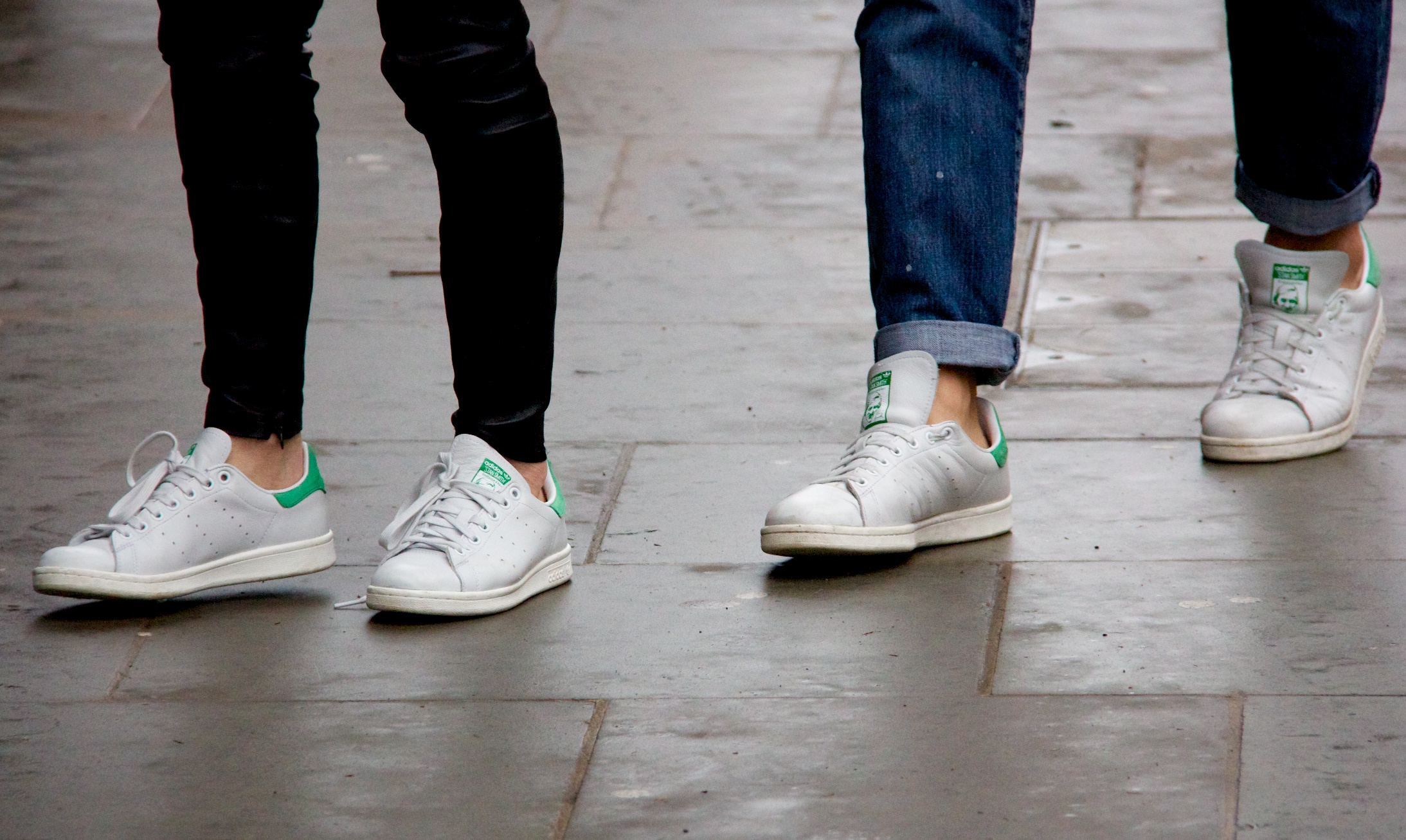
The Adidas Stan Smith: you don't become the man until you've walked a mile in his shoes. #motivationalwalker


When fashion outlier and Saint Laurent creative director Hedi Slimane rebuffed the sneaker trend as a footwear of yore, he predicted wrong. Over the past few years, sneakers have become the people's choice of street luxury and street casual. They are as ubiquitous as they're stylishly objects of desire.

One such sneaker here is the Adidas Stan Smith, a long withstanding force whose marketability has entailed numerous reissues today. Compared with the tennis superstar himself who has won 39 singles titles and 61 doubles titles back in 1973, the namesake label is the No. 1 player of street casual footwear. It's distinctiveness is pared down beside the Jeremy Scott halloween equivalent of teddy bears and homoeroticised wings, it's iconic structure in full smooth grain leather, perforated 3-stripes, and tonal rubber outsole is as breakthrough as its minimalist aesthetic. And whereas Smith now coaches in Hilton Head, Southern California, the Adidas Stan Smith, however, is still regnant- and every bit relevant all over the globe.

At 30 million pairs sold worldwide, these pristine simple classics are famous. Sported by celebrities from David Bowie to Rihanna, editors are too lining the front row in Stan Smith during fashion week like a front set of teeth. Designers like Phoebe Philo and Marc Jacobs have worn them down the runway, and every other netizen who wished they were normcore enough to take on the Stan Smith has touted them the cornerstone of classic footwear merchandising. More recently, Gisele Bundchen has modeled in them with no clothes on except for a white pair of socks, as raw as they looked.

"It's like a canvas in a way," says Stan Smith, as reported by the New York Times. Being likened to a blank slate, the shoes are a simplicity that allows personalisation of one's own style to accent the austerity of its iconic white form. From selvedge denim to pipeline trousers, at the outset, the sneakers are what pulls it all together. It has a structure that makes wearing them louche still look cool. It has a sleekness that still screams an understated luxury. It's a shoe that, while does not brag like the bells and whistles of other designer footwear, still draws the attention to itself. Its appeal, synonymous to the white t-shirt, is contagious.
It's a shoe bag.
The New Yorker just can't help himself.
From masturbating all over the Smith's.

As with fashion to move where the pendulum swings, designers have caught on to the momentum by appropriating the Smith's. For its season, Raf Simons's customized "R" assumed the perforated 3-stripes, now available in a spectrum of colours. Alexander Wang, who referenced the athletic scene (each season more explicitly) in a sneaker fetish of a Spring 2015 collection, has a suite of bags lined up in sneaker simulacrum. Instead of washing out, the Stan Smiths are celebrated more than ever, in a collaborative effort with every cross cultural reference imaginable too. Like with the crass American Dad cartoon feature, or with the American heartthrob, Pharrell Williams, your pair of Stan Smith is an untouchable classic that will see better days ahead when reissues go through yet another life cycle.